


The Debate on Music Literacy in Early Childhood, Part I

Addressing some simple questions: Is it possible? Can we feasibly do so? Should we teach this? This post sets the stage for a 2-part debate on music literacy for young children.
Some Background
As a studio music teacher with over twenty five years of experience, I can proudly say that I have taught several students to read a music staff before they could read English. There was nothing wrong with their abilities to read English. It was just that they were either more excited to read notes, or there was someone working on this skill with them 1:1 each week, or maybe I was doing something right with my teaching techniques and the concepts just… stuck. I’d like to think it was the latter, but I don’t really brag. But the reality definitely hits when the four-year-old that just accurately reads back twenty pitches in C position treble clef in under forty seconds, can’t read what you wrote at the top of an assigned method book piece. It hits a certain feeling of pride inside, but the feeling is short-lived, because generally these students are easily reading picture books within several months.
Unless one has started private lessons at a young age, most students don’t start to seriously read pitch until they begin a band or orchestra program around fourth grade. For those lucky enough to have a strong general music program at their school, there may be some limited reading in third grade with a recorder program, or sooner in a non-applicated way. By non-applicated, I mean that students are shown how to name pitches, and may do it a little with mallets instruments, but the pace is so slow that they are probably memorizing what to do to get the correct answer, and not constantly putting the reading skills to use.
Why Music Literacy In Early Childhood Doesn’t Happen
Why aren’t students taught to read music earlier? Without researching the reasons why (and I don’t intend to because circumstances of instruction vary so much everywhere), I suspect much of it has to do with instructional time, the increasing number of students with IEPs and other learning needs deterring educators from trying (perhaps a fear of failure in the experiment). I also think it’s because the focus is put so much on musical performance and output, that there simply isn’t time in the school year for a unit like this.
Let’s address the performance issue first, and let’s use Kindergarten for our example. Kindergartners learn to sing as a group. They sing songs that have themes about different times of the year, things happening at school, the weather, holidays, etc. There are activities that include simple instruments, movement, improvisation, structured actions, and games. Sometimes these end products would be performed for school-wide programs, or for parent performance. Rehearsal for this takes time.
And one could say that this just about sums up the average Kindergarten music program. When I taught Kindergarten, my program looked a lot like this too. I saved rhythm reading for first grade and beginner pitch reading for second grade.

Ways Around The Challenges
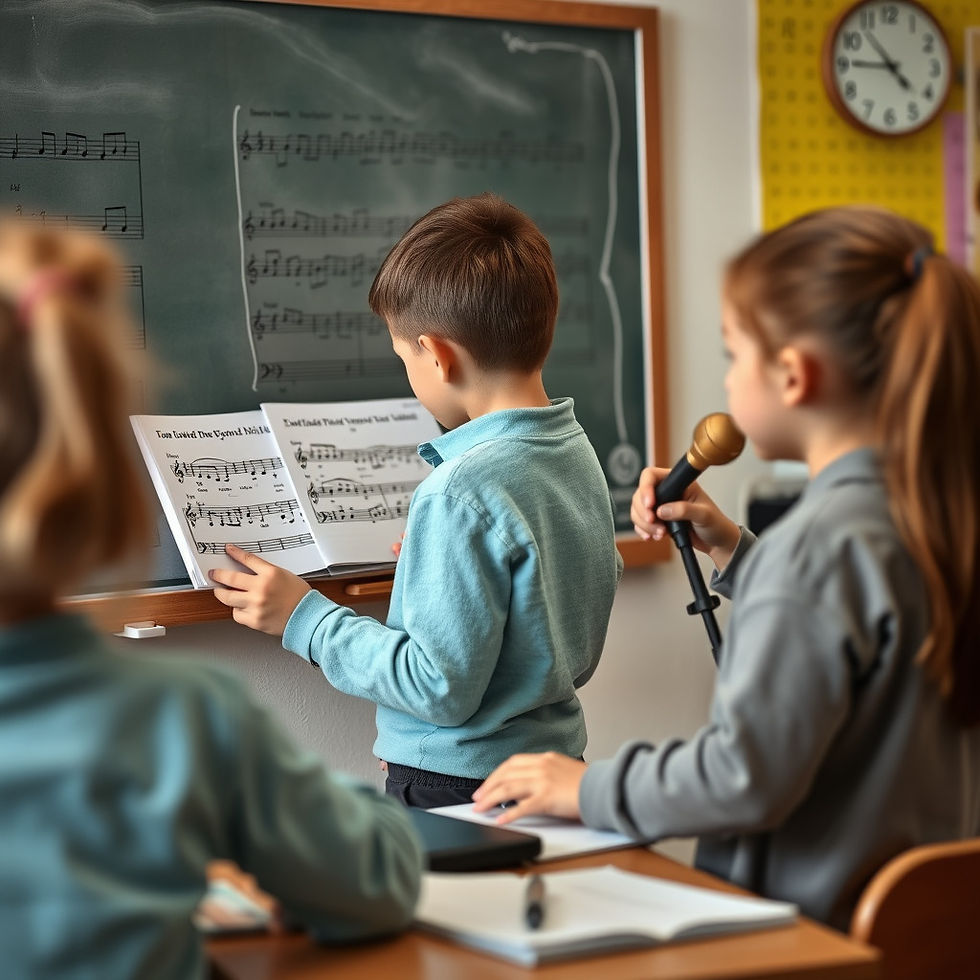
But what if there was the time to infuse what a repeated ostinato looks like? Or one repeated line in a song is taught using contour reading, that turns into letters, that turns into a few bars on an Orff instrument that students get to try? What if the clapping pattern was drawn on the board and students are shown how their eyes follow the fast and slow notes?
These efforts take minutes during the instructional period, and it shows students from Year 1 that a music staff is approachable, not scary, helpful, and that real note reading may not be too far off. Think of it as helping students understand a top secret special code that musicians know, and you want them to know too. Cracking the code allows them to discover amazing sounds that they get to discover and even create. If I was five again and heard a music teacher say that, I would be all about it!
In my private lesson setting, I don’t generally use Early Beginner prep books. I have absolutely taken four-and-five-year-olds through the method books that are meant for eight-and-nine-year-olds. I don’t drag them through it, they don’t get frustrated. If the pace is too fast, I add games. I’ve had a zero percent failure rate. And the parents are flabbergasted that their children can do what they often can’t. It’s somewhat normal for six-through-eight-year-olds to teach themselves how to read pitch after some of the conditioning I have them do. I used the Alfred Basic Piano Library 1A Book, and they’re completely ready for it by the time we reach the “Rain, Rain” song that teaches bass clef pitch first. I hype them up and let them know that the “big kid” notes are on the horizon, and together we’ll count down the lessons until it happens. They’re ready and sometimes they’ve beaten me to it. Yes, it’s possible.
Continued Discussion…
But let’s move back into the “feasible” category. I’m working with these students in private lessons. What about in the classroom setting? Think about it, comment below, share, talk with your colleagues. I’m excited to write the second post soon, but I’d love to hear your initial thoughts first.
To see how I have handled the topic with other teachers, or to dive right in and see how you can do this in your classroom next school year, visit: Uplevel U: Music and download our live interactive course catalog here: Live, Interactive Uplevel U: Music Course Catalog.

This article was written by Music Room/Uplevel U: Music's owner and creator, Karen (Kay) Janiszewski. This article was written by Music Room/Uplevel U: Music's owner and creator, Karen (Kay) Janiszewski.
#musicteacher #musiceducation #musiceducators #musicprofessionaldevelopment #musicpd #musicedpd #musicpde #musicedpde #musicceu #musicedceu


Comments